
Naming the Unsayable: Why Editors Matter More Than AI
RELINEEDITING AT WORDHOUSE
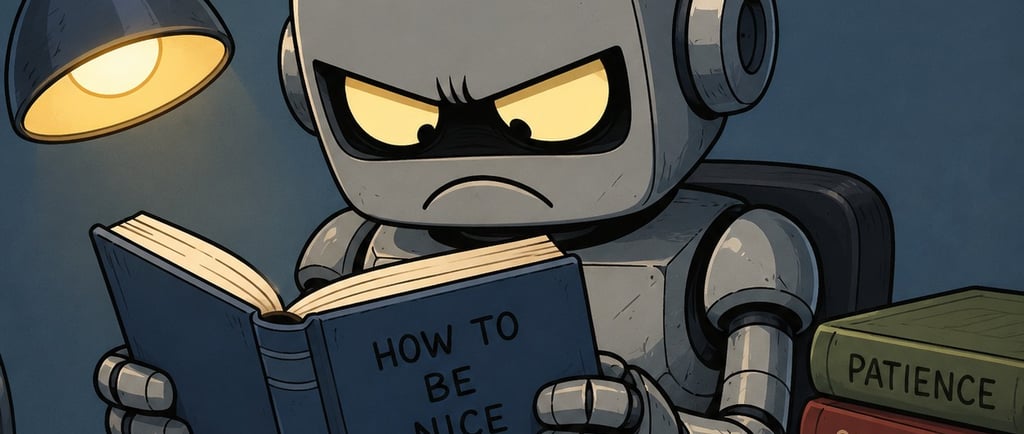
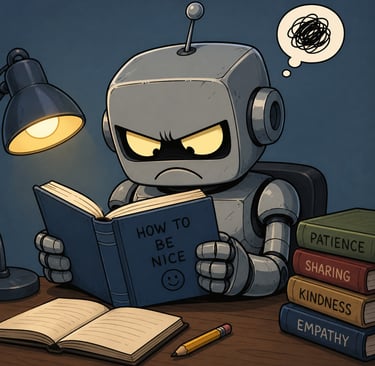
This essay does not argue whether the allegations in the Commonwealth Short Story Prize controversy were correct (Creamer, 2026). I'm merely using the debate as a starting point to examine what I think is the broader editorial question: how editors recognize originality, linguistic innovation, and new ways of naming experience in an age increasingly shaped by AI.
Beyond Detecting AI, Editors Must Recognize New Language
Much of the public conversation about AI in publishing asks whether editors can distinguish machine-generated writing from human writing. That question is too narrow. AI already assists many writers, just as spellcheck, grammar software, and research tools have long influenced the writing process. The more important editorial question is different: Does the writing merely reproduce familiar language, or does it create new ways of seeing?
Editors are not simply identifying whether a manuscript is AI-assisted or human-authored. They are evaluating whether language itself is doing something original. Great writing has always expanded vocabulary, invented expressions, challenged inherited categories, and named experiences that previously had no adequate words. Artificial intelligence can imitate existing linguistic patterns remarkably well, but editorial judgment lies in recognizing when language itself is evolving. The future of editing will depend less on detecting AI and more on discerning genuine acts of linguistic discovery.
AI Controversies Reveal a Much Older Editorial Question
The recent controversy surrounding a writer accused of submitting AI-generated work to a literary competition sparked predictable debates about authorship, originality, and machine-generated text. Yet beneath the technological controversy lies an older editorial question: What exactly are we reading?
Readers, judges, editors, and publishers increasingly struggle to identify whether a text is AI-generated, AI-assisted, machine-influenced, human-authored but machine-edited, or written entirely by a person whose style resembles AI. The boundaries are becoming increasingly difficult to define because writing itself now exists on a continuum rather than in fixed categories.
When Granta announced that it would no longer participate in publishing partnerships where it lacked editorial control over submissions, its concern extended beyond artificial intelligence. It was ultimately about editorial authority: who has the right to determine where a text comes from, how it was made, and what it should be called.
Editors Do More Than Edit. They Name.
Editing has always involved acts of classification. Editors distinguish journalism from commentary, memoir from autobiography, criticism from opinion, literature from marketing, and countless genres in between. These categories appear natural only because generations of editors have made them familiar.
Naming is never neutral. Once editors assign categories, readers inherit them, search engines index them, institutions evaluate them, and publishers organize knowledge around them. Editorial language quietly shapes how culture understands itself. Every label becomes a framework through which future writing is interpreted.
New Ideas Arrive Before Their Vocabulary
Every major social change produces experiences that existing language cannot fully describe. Emerging technologies reshape relationships. New forms of labor transform identity. Cultural shifts create emotional experiences that established vocabulary struggles to contain. Writers often become the first people to invent names for these realities.
Such language rarely appears polished at first. It sounds provisional, awkward, even self-conscious. Editors may mistake unfamiliar terminology for weak writing when, in fact, they are witnessing language in its earliest stages of development. Their task is to distinguish between writing that is genuinely unclear and writing that simply lacks an established vocabulary.
Questioning the Labels We Inherit
Many editorial labels appear descriptive while quietly carrying assumptions: outsider, extremist, disruptive thinker, controversial, fringe, politically incorrect. These words do not merely describe people or ideas. They frame how readers encounter them before the argument even begins.
Editors, therefore, have a responsibility to interrogate inherited terminology. Who introduced the label? Whose interests does it serve? What assumptions does it quietly preserve? Sometimes removing a label allows readers to encounter an idea with greater independence rather than through inherited judgments.
The Subjects That Resist Easy Naming
Editorial decisions extend beyond words to the subjects themselves. Politically uncomfortable ideas, commercially unfashionable topics, forgotten histories, unpopular perspectives, and unconventional narratives often become difficult to publish not because they lack value but because they resist existing categories.
Editors can either reinforce prevailing frameworks or create space for subjects that fall outside them. In an age shaped by algorithms, metrics, and trend forecasting, the greatest editorial blind spot may not be censorship but an excessive preference for language and ideas that already fit established systems.
Difficult Writing Is Not Always Weak Writing
Editors rightly pursue clarity, but clarity is not the only measure of successful prose. Certain experiences—grief, shame, faith, trauma, transformation, awe, love—resist straightforward explanation. Writers often rely on metaphor, fragmentation, rhythm, silence, or ambiguity because ordinary exposition cannot fully contain what they wish to express.
Editorial judgment therefore requires recognizing the difference between weak writing and difficult writing. Weak writing obscures meaning unnecessarily. Difficult writing reflects subjects that cannot easily be simplified. One calls for revision; the other often calls for patience.
Protecting Strange Language
Search engines reward familiar keywords. Audience analytics favor recognizable patterns. AI systems excel at reproducing statistical averages of existing language. None of these developments is inherently problematic. They improve discoverability and efficiency. The danger arises when familiarity itself becomes the standard of literary value.
Every phrase we now consider ordinary once sounded unusual. Every established category began as an unfamiliar proposal. Every cultural vocabulary passed through a period when it seemed awkward, unnecessary, or strange. Language grows because someone first dares to name what previously had no accepted name.
Artificial intelligence can reproduce existing language with extraordinary fluency. What it cannot easily produce is genuine linguistic discovery. The editor's responsibility, therefore, is no longer simply to determine whether a text was written by a human or assisted by AI. Rather, it is to recognize whether the writing expands the possibilities of language itself, whether it discovers a new expression, names a previously unarticulated experience, or offers readers an unfamiliar way of seeing the world through words. That capacity for recognizing linguistic invention, rather than merely identifying technological assistance, may become the defining editorial skill of the AI age.
References
Creamer, E. (2026, June 20). Granta stops publishing short story award winners over AI controversy. The Guardian. https://www.theguardian.com/books/2026/jun/20/granta-magazine-commonwealth-short-story-prize-ai
Down, A., & Creamer, E. (2026, May 19). 'Obvious markers of AI': Doubts raised over winner of short story prize. The Guardian. https://www.theguardian.com/books/2026/may/19/commonwealth-short-story-prize-winner-doubts-ai-artificial-intelligence
Gibbs, A., & Coto, D. (2026, May 22). AI controversy swirls around writer from Trinidad and Tobago who won a prestigious prize. Associated Press. https://apnews.com/article/9c7441de907664136a7ae0c8af0912ad