Why Retirement in the Philippines Feels Unsettling—Therefore, Be Creative
BEING AT WORDHOUSEPERSONAL
Numbers I Cannot Ignore
My retirement clearance took about a month to process. Filling out forms and getting signatures, even from property custodians on campus, following up with the library, the faculty cooperative, the IT office, the Culture and Research Office, the Dean’s office, and finally the Provost—who gave the final go signal for the release of my retirement pay—is straightforward but slow, even with online digital signatures.
While I did not have issues with any of the offices, the waiting was stressful. What should have been a simple administrative step became a long period of uncertainty that affected my sleep and focus. The retirement pay took longer to process. But bills don’t retire; they accumulate.
With SSS pension processing, the online system for retirement applications is cramped and slow. It took two days before they emailed back to say I had uploaded the wrong ID and that the number in the bank account should match.
Healthcare is another concern. PhilHealth does not fully cover long hospitalizations, even for illnesses like the common flu. Out-of-pocket payment in retirement, when income is fixed, is worrisome. Even routine check-ups feel like a luxury. Older citizens in the Philippines rely on fragmented systems of support: small government assistance programs, limited community welfare services, help from local politicians, and sources such as PCSO, a gambling operation that helps fund services and basic social protection for vulnerable sectors.
The assurance of a regular pension until I die, even the promise of ₱100,000 if I reach the age of 100, doesn’t diminish the anxiety brought on by the astronomical rise in the costs of food, electricity, and transportation. The weakening of the dollar against the peso is felt not only by OFWs but also in everyday GCash transactions, where money seems to lose value faster than it can be spent.
Yet whining can’t be the default mode at my old age. There is so much more suffering unfolding in the wider world. Conflicts in the Middle East and ongoing tensions in Asia involving China and Taiwan create a constant sense of instability. What I’m praying for is world peace—not a cliché Miss Universe quip after all, but a real, urgent concern. In retirement, I worry about the young who might enter an inevitable world war, though merely “rumored” right now.
The Weight of an Assumption
When you grow old in the Philippines, your family will take care of you. This assumption is common and unquestioned in Filipino families. From my twenties to middle age, I was often asked: “Sino ang mag-aalaga sa’yo pagtanda mo?” I used to answer with an existential shrug—who knows? Whoever is there at that time will be the caregiver. The future is uncertain anyway. Who is to say we are even here tomorrow?
Nevertheless, as you age, you get folded back into the family. In caregiving, “care” by family members, and nobody else, is a paramount given. Whatever care a family can give is comforting; family allows for this complete safety system.
We often tell younger people to learn how to give back. But when we are the ones needing more care, it becomes harder to accept help. “You can stay with us,” or “you can just rest”—these are said with love, but they come with added responsibilities. While Filipino families can be generous and deeply loyal, caregiving is a sacrifice. There’s the anxiety that, as one being cared for, you are becoming a burden. This shows up in your increasing dependence, in others adjusting their routines to accommodate your needs, and in the family becoming more aware of the added costs of living.
To Stay in the Lifestyle of Retirement
Maintenance medicine, healthier food, small trips abroad, occasional staycations, or even just habitual coffee at Starbucks—what becomes part of a “lifestyle of retirement”? A modest pension covers the mere basics, no extras, unless you’re a son or daughter of a conglomerate, of course.
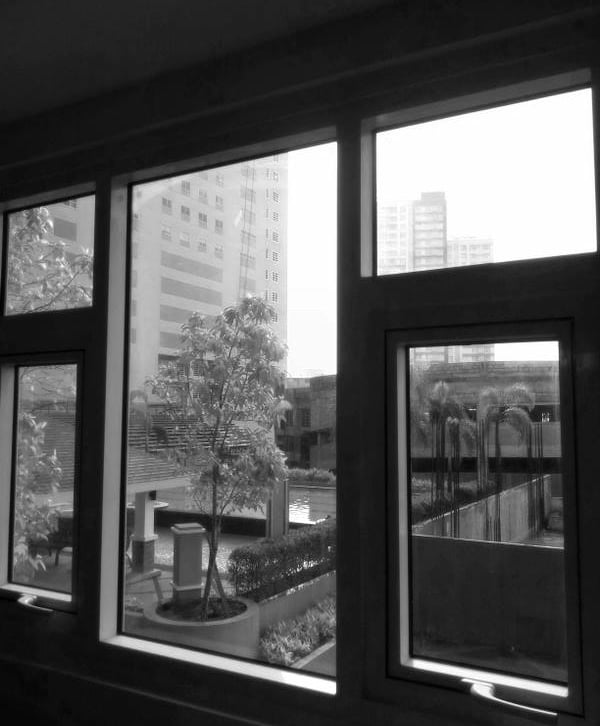
Still, there are lifestyle perks in retirement, indulgences that can be counted as part of that slow transition to a more meditative phase. For me, just walking in the condo garden amenity, slow, unhurried, circling a familiar path, is precious. The horizon opens up, and I stare longer at the clouds, counting the airplanes crossing the sky. The open air energizes me. After all, I am retiring as a writer who spends more time sitting down, in an enclosed space, penning thoughts like this.
Then, I will schedule occasional trips to museums, malls, bazaars, and galleries to ogle the creations of brands, artists, and creatives. I have retired window shopping—ogling bags, ceramics, furniture—as my pastime before; in retirement, I’ve got every vanity object I need. However, I will spend more time studying visual feasts by Filipino artists. Updating myself on the giftedness of my fellow creatives, this is a fresh indulgence.
And finally, there is reading. Always reading, morning, afternoon, in between. Nothing beats a page’s way of welcoming me into this lifestyle of reading indulgence.
What It Means to Stay Creative
Creativity covers every aspect of my daily life as a senior citizen.
It means being creative with time, avoiding boredom while accepting a slower pace.
It means being creative with money, planning healthy meals within a limited budget.
It means being creative with movement, stretching instead of surrendering to the pull of the bed, or taking a short walk even when the latest episode of a K-drama insists on one more hour.
It means being creative with family, praying for each member with intention and consistency, and really seeing them, holding them in attention and care. Indifference is not an option.
It means being creative with friendships, allowing conversations to grow deeper, more deliberate. It means visiting old friends, both those who stayed and those who once drifted but still intends to remain connected.
It means being creative in speech and action, staying composed even when healthcare and finances feel uncertain.
It means writing freely and as desired, without the fear of judgment.
Creativity is how I stay grounded. My days feel directionless without it; my thoughts scatter easily without its deliberateness.
What Retirement Promises
Retirement means that I have stopped full-time paid teaching. Now, I am waking up to a new routine, one that I have created for myself. In retirement, I write more, read more, study more. In retirement, as I deal with constant financial uncertainty, my days are filled with intentional activity. One day at a time, I am learning that ageing can be meaningful and fun if I keep things simple and functional. This life stage is not something to overthink, since each day carries its own worries, not at all different from when you’re young and employed.